Ricoh recently announced the GR IIIx, a standard-focal-length version of the GR III. By standard, I mean the truer standard, 40mm, not the long-standard which was so prevalent during the early rangefinder and film SLR age. Whereas 50mm has just a bit of telephoto effect, 40mm is closer to life, with a tad more peripheral information, and neutral rendition of the scene.
This focal length comes from a 26.1mm f2.8 lens, a bit longer than the 18.3mm f2.8 lens on the 28mm version of the GR, and in fact all of the previous GR cameras inclusive of the film era (except for the GR21). So it’s an all-new thing to have this particular camera with a standard focal length. It’s no small change, but one that GR users have asked for, so it’s nice to see Ricoh’s GR product team listening to feedback and putting time and money into something new. Especially in a pandemic-hit economy, it’s a bit of a risk, so it shows a certain respect for their user base.
Because the cameras are essentially the same in every way but lens, discussion around the two models really has to center on the focal length, or rather the field of view of these lenses on an APS-C sensor (the distinction has more to do with depth-of-field, as the 40mm GR IIIx has the depth-of-field of a 26mm f2.8 lens, and the difference between 18.3mm and 26.1mm is really not that much for creative purposes, in my opinion).

There is actually quite a bit of difference between the two lenses, in the sense of composition. Where I called the 40mm neutral above, I would not call 28mm neutral. It’s a wide angle, albeit a slightly more tame wide angle than something like a 21mm or wider. You don’t have to wrangle with distortion quite so much with 28mm, especially when your subject is further away from the lens – but distortion isn’t absent. Shooting at angles, rather than straight-on and level, will produce it, and compositionally it really just comes down to how much of it you will tolerate in the scene. But another, even more important, aspect of a 28mm lens is the relative closeness of your main subject, the “push-pull” effect. A main subject which is close to the lens is “pulled in,” meaning the relative size of the subject is larger than the background. Distant subjects are shrank, or “pushed out.” When you use this feature creatively, it can result in some powerful compositional effects. This is the main thing I like about the 28mm lens, it offers punchy dynamism when used correctly. The negative aspect of the 28mm is that, if you don’t take care to use these features to your advantage, they will still be present, and work against you.
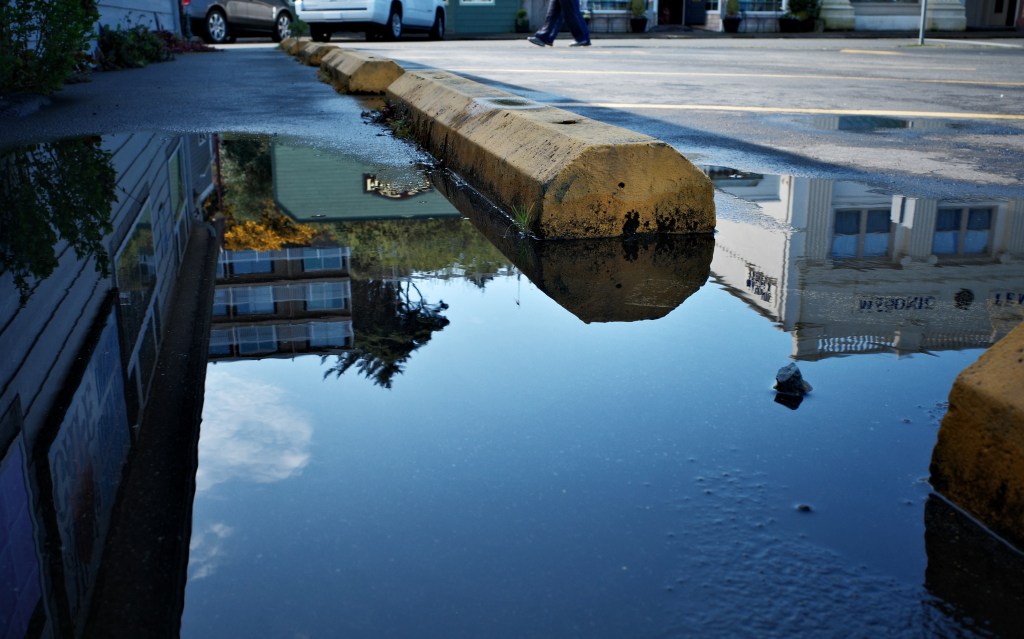
Now, the 40mm is a very different kind of lens. In truth, that “push-pull” is still there, but because less of the scene makes it into the frame, you can’t get it to work as powerfully. Try shooting a person on the street by singling them out with the “pull” effect of a 28mm lens, and then frame it with a 40mm at the same distance. You can’t get your subject in the frame anymore, only a small part of them. Likewise, the “push” is less apparent, because distant elements are more singled out by the tighter framelines. 40mm is instead a “cerebral” kind of lens, meaning it offers a straight line from your perception to the image, singling out the main subject in much the same way as you noticed it. It is still placed fairly naturally in its surroundings, without much perspective flattening that you might get from a 50mm or longer lens (these lenses start to impart their own character to an image, whereas a 40mm does not). 40mm is approachable, honest and quite easy to use, since the distortion and push-pull effect of a wide angle is not present (some might say a 35mm lens offers that kind of neutral, easy-to-use nature as well, but I find it to still possess a bit of distortion that seems absent in the 40mm).
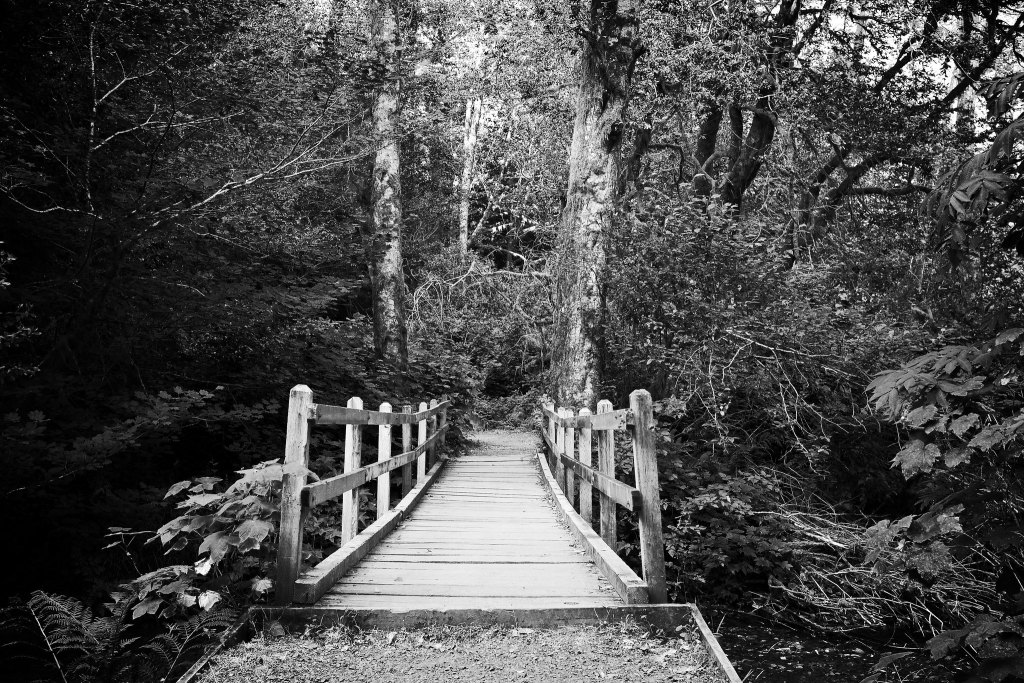
28mm requires either luck or a deft hand to get a strong photo, while 40mm, since it provides a straight line from your thought to the image, requires good ideas, good sight, good observational skills. In that sense, it makes perfect sense to offer a GR camera in 40mm, since the camera line is billed as the ultimate snapshooter’s camera. 40mm makes a great snapshot focal length, as evidenced by its relative prominence during the fixed-lens rangefinder and compact era from approximately the late 1950’s-1970’s. However, in the modern age, a wider angle, able to capture more of a scene, is prioritized over the neutrality and simplicity of the 40mm. Notice how long 28mm has been the de facto standard for smartphone cameras (a much shorter period than the 50’s-70’s, to be sure, but in today’s rapid iteration and the rampantly planned obsolescence of the smartphone era, an eternity). The question, then, for GR IIIx users, is “can you get it in the frame?” Modern snapshooters are not used to a standard focal length.
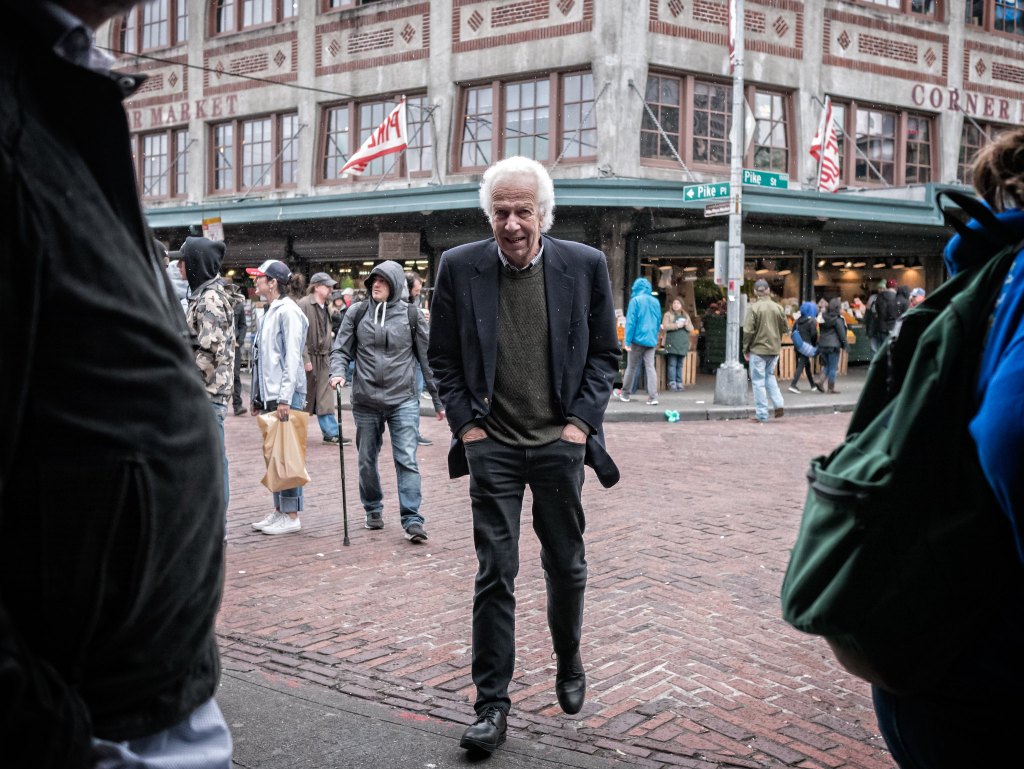
Of course, the GR IIIx was made in response to Ricoh’s most enthusiastic users and those of the photographic punditry that know what a standard focal length lens is. The IIIx may be a less popular camera than the GR III, and I suspect Ricoh wants it to be that way, rather than moving away form what has been a core part of the GR’s identity, the 28mm lens. Having choice, especially for a compact camera line with a reputation for use by experienced photographers and an enthusiastic, if niche, user base, is a good thing. It will be exciting to see what “GR-ists” come up with using this cerebral focal length, and it is certainly a compelling idea. There is literally no other compact digital camera that fits in your pocket and has a standard field-of-view prime lens on the market today. Bravo, Ricoh.
 The Sprocket Docket