Sometimes there is not enough leisure time to pen the deep photographic insights. In lieu of these (both insights and leisure time), I think there may be space for some simple ramblings. Here is one.
It’s hard for me to fully express how useful is the venerable DSLR platform. When I purchased the Pentax K-1 Mark II, it took me a little while to acclimate myself with this (relatively) large and (certainly) heavy beast. I started off with good lenses from the get-go, the best of which were the Pentax-M 50mm f1.7, a tiny fast fifty from the manual-focus film era, and the HD FA 35mm f2, a superficial remake of the earlier Pentax-FA autofocus 35mm lens from the film era as well. If there’s a pattern for Pentax, it’s that the majority of lenses you’ll find are really film-era lenses, some of them updated with better coatings for the digital world.
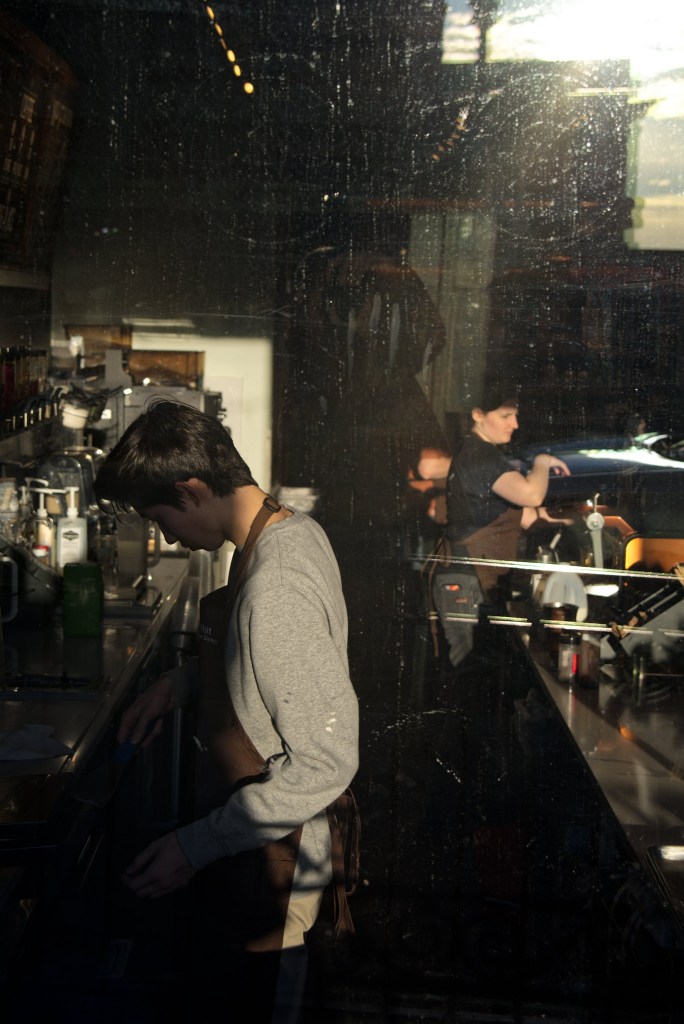
The lenses then certainly weren’t a problem. the only problem was me, figuring out how to adapt my style to manage the hefty and conspicuous camera, coming from smaller and more inconspicuous ones like the Ricoh GR, fixed-lens film rangefinders, and the like. Partly I needed to learn to allow myself to stand out a little when taking a photo, which meant that I needed to also learn how to pick a moment for candid street photography. In a sense, I felt that Henri Cartier-Bresson’s Decisive Moment was for me a moment in which the person wouldn’t immediately react to my taking the shot. both because of the more audible shutter/mirror slap noise, and because everybody knows that a DSLR camera is a “professional” camera which means that my intentions are therefore more nefarious and possibly exploitative.
Except that, well, I didn’t really find myself getting that reaction. The K-1 gets mostly ignored like my smaller cameras get mostly ignored, and I wasn’t expecting that. Last time I had a DSLR for any extensive period of time (not counting the Pentax KP, since I did not shoot extensively on the street with it – at the time, the Voigtlander Bessa-T, or the Ricoh GR III, got the street action – was the Nikon D40, purchased a few years into the DSLR domination of the photographic world. You remember: the time when every soccer mom had a colorful Nikon or Canon strap around her neck with a DSLR and kit lens, yet somehow simultaneously pointing a DSLR at someone raised instant hackles and accusations of being paparazzi…
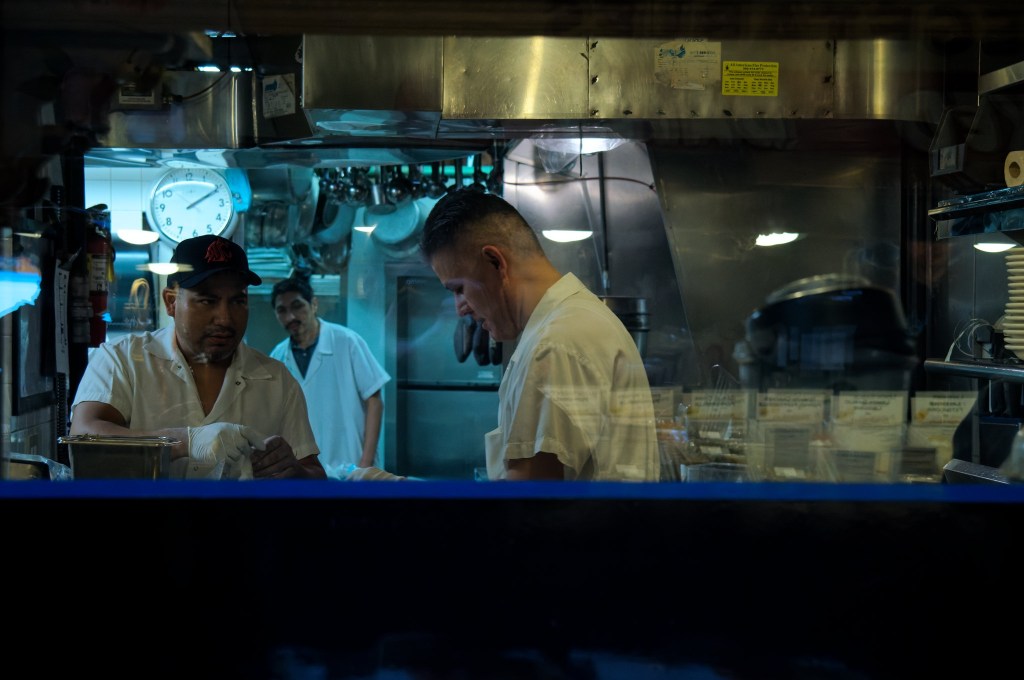
Well, we live in a time when I believe the camera is increasingly seen as an oddity, and therefore photographers with cameras are seen as harmless oddities as well. It might not be this way everywhere (Germany, for example, has enacted stricter laws about taking a photograph of someone else in public, as if there were even a good way to avoid doing that at crowded tourist attractions. I’d still argue that filming or photographing with smartphones, devices with ready connections to social media platforms, are the main target of this legislation), but at least in the Pacific Northwest region of the U.S., I’ve noticed this attitude in urban areas. Small towns are different, and you should be prepared for a different attitude from locals than you’d get from tourists, and strategize accordingly.
So, now that the DSLR seems to enjoy a little less conspicuousness than before, I find myself freed up to recognize its strengths as a street camera. In short, it’s one of the best kinds of cameras for the street. Copious easy-access controls mean that changing settings on the fly is very fast. Autofocus is accurate and speedy, even though Pentax is seen as having B-tier autofocus compared to the best Canon/Nikon models. The precise framing of a reflex viewfinder is welcome. And, unlike a mirrorless camera where it is very easy to snap, snap, snap away, I find the heft and precision of the body to be helpful in choosing my shots more carefully. Sometimes this means the difference between getting six sloppy shots of a scene or one good one where I took the time to frame properly and wait for an interesting moment.
The last realization I had is how powerful and flexible the full-frame 36-megapixel sensor in the K-1 is. Initially I was a little let down by the JPEGs produced by the camera, and even by some of my early RAW conversions, since Pentax files do not get the best starting point in RAW processors like Lightroom or DXO PhotoLab. This was a similar issue with Panasonic Micro Four Thirds RAW files. If you’re seen as a little lesser-tiered of a camera platform, then you don’t get engineers or programmers at Adobe or DXO taking the time to fine-tune the way colors or contrast are handled. Purchasing some profiles from Color Fidelity (the old Huelight makers) made a world of difference. So did using DXO’s powerful DeepPRIME noise reduction on high-ISO files. Now I am getting JPEGs which wow me with the level of fidelity and detail, even when I have cropped in, raised shadows considerably, or any other level of adjustment which goes beyond what can be done with a native JPEG.
So, at the end of this peregrination of thought-landscape, I would draw two conclusions: one, you don’t always know what you have (in the powerful DSLR platform) until it’s gone (or going, as few new DSLRs are being produced), and two, it’s okay that Pentax hasn’t updated the K-1 mark II yet. It still performs admirably, and while I hear a rather contradictory mix of criticisms ranging from a need to update the older technology in a camera like the K-1 to a complaint of digital cameras in general being iterated on too often, reaching obsolescence before they even come of age, and increasing in cost for only very minor updates which don’t target real photographers, I think Pentax might be resting on a rather good cadence, reminiscent of the film era where they produced a camera like the mighty (and today mightily-priced secondhand) K1000 for 21 years. There is little need to chase after something when you have everything you need. When did photographers stop wanting to be content?

 The Sprocket Docket