I recently completed a month-long challenge, shooting with the same camera and lens and posting a photo each day in an online photography community. My camera of choice was the Pentax K-3 Mark
III Monochrome, and my lens was the HD DA 15mm f/4 Limited. It’s a wide-angle prime lens which
equates to about 22.5mm on the APS-C sensor, very close to the classic 21mm focal length.
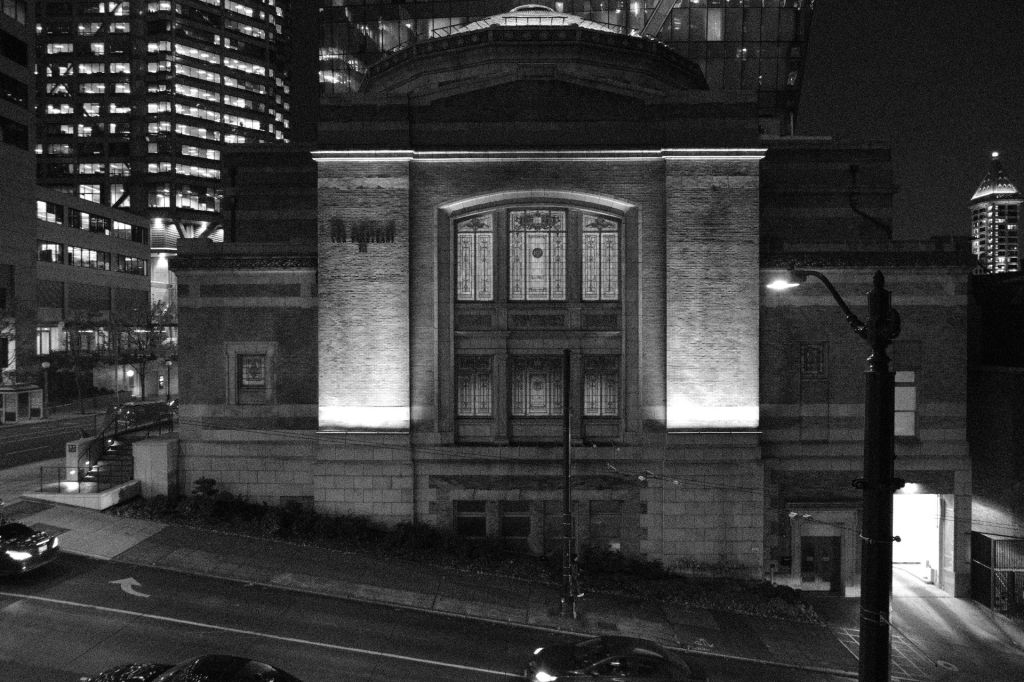
Why did Pentax choose to come close, but not exactly match the classic 21mm with this lens? It’s
an open question, but they have done it with all or nearly all of their Limited series of
lenses, both the DA for crop sensors and the FA for full frame. It’s part of the unique Pentax
charm, I suppose. They dare to be different, so why shouldn’t I?
And different is certainly a good way to describe the camera and lens combination. Not only was
I restricted to an unusual, and very nearly ultra-wide, focal length, but in a dedicated
monochrome camera to boot. This presented some challenges for me, since I had to come up with an
image (which I could bear to present to other photographers) every day.
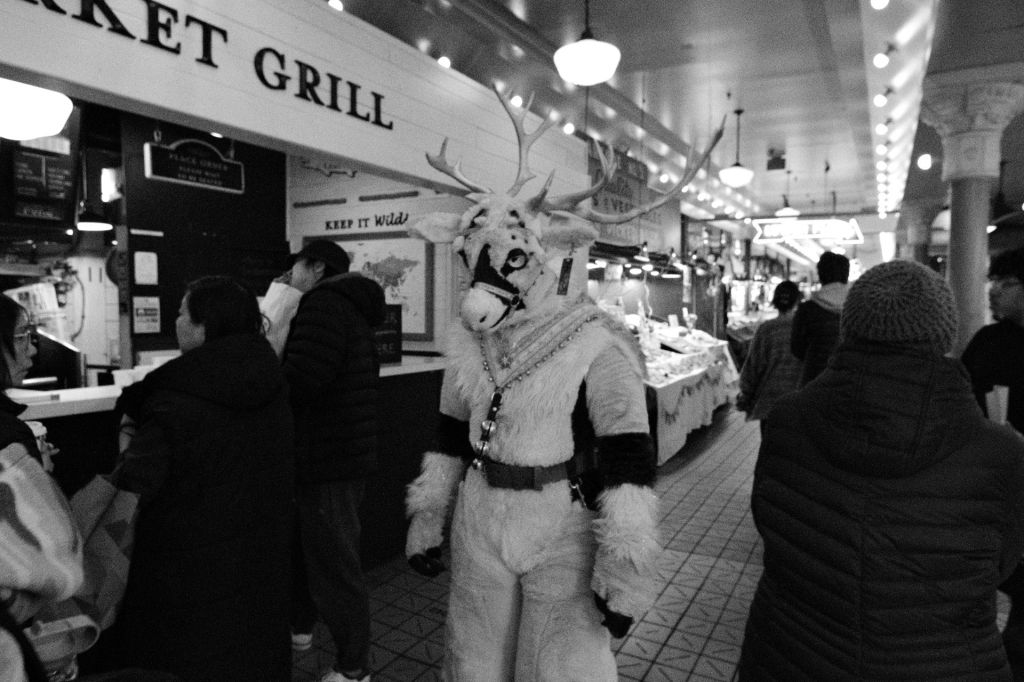
Fortunately, I have always taken to shooting with a wide-angle lens. The field of view can be
difficult to navigate if you are struggling with omitting distractions in your frame, but the
secret with these lenses is simple enough: get closer. Wide lenses will magnify your subject as
you narrow the gap between subject and lens – it’s part of the distortion, the ultra-wide
effect, you can get, but if you know how to manage it, you can use it to your advantage.
From my years with the 28mm-equivalent lens on the Ricoh GR series, I learned the wide-angle
characteristic which I call “push-pull.” I can’t remember whether I cribbed this language from
someone else (it’s likely enough, since we all become sponges during our learning period with
photography). I don’t claim the concept as my own, but it goes something like this: the greater
the distance to your subject, the more a wide-angle lens will “push” your subject away from the
photo. This means that they become less prominent relative to the background elements. The
closer in that you get, the more that the lens will “pull” your subject to wards the camera and
the viewer. They’ll grow larger relative to background elements. Of course, this works with any
foreground elements which are close to the camera as well, so you can use this for expressing
creative relationships between elements.

When you combine the “pull” factor with the surprisingly close minimum focus distance of most
wide-angle lenses, you will find that you can get quite close and isolate your main subjects
quite well. This may not work for human faces, since you will tend to find the nose and other
facial features will lose their normal proportions. This can offer some whimsy or humor to some
shots. When used carefully, you can really emphasize small things, like objects in a still life
image, or insects, or… the list is limited by your imagination.
I found my chosen combination to be very engaging to my creativity, and the combo made a
surprisingly good one for snapshot shooting, as well as a bit of street photography. I will
follow this up with another article on the more technical aspects of the gear, and how I found
it to perform. For now, thank you for reading!
 The Sprocket Docket