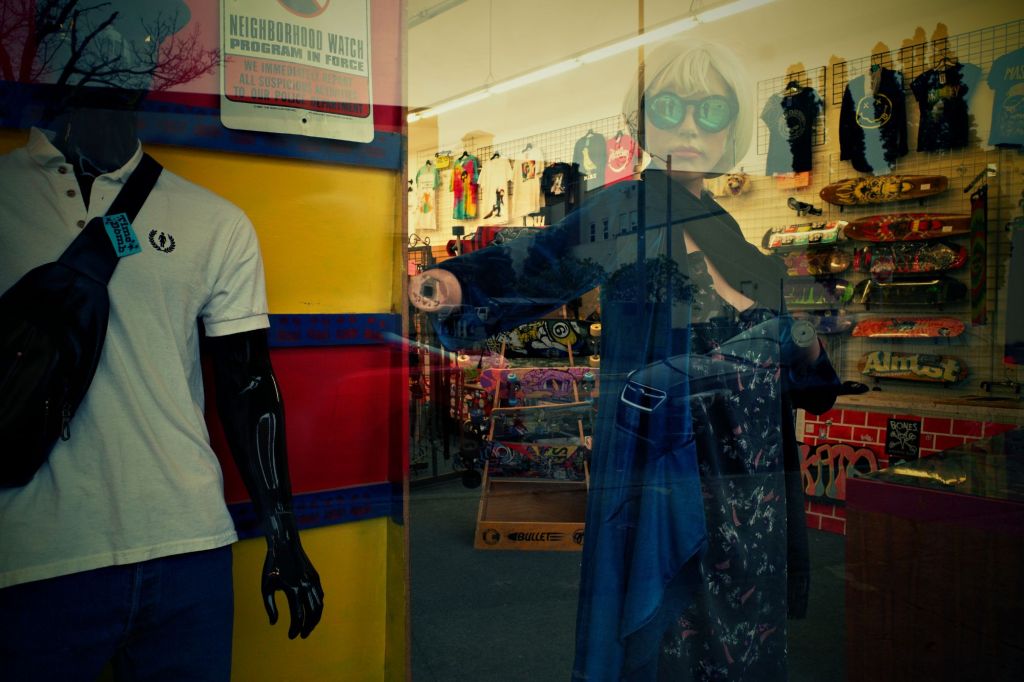
I was listening to a podcast this morning (the excellent “Prime Lenses” photography podcast by Iain Farrell), and the guest mentioned the era of Lomography: a time long, long ago (the internet will tell you it was 2011, but that coincides mostly with the rise of Instagram, as far as I can tell. Instagram offered the same style of filters but for digital photography, while the Lomography movement was based around film, and probably rose to prominence in the 1990s to early 2000s) when the distinctive aesthetic of vivid, surreal colors and technically imperfect snapshot photography pervaded the hobbyist photography world. It was so popular, in fact, that it could be argued Instagram owed them for its own rise to dominance.
Many photographers of the more technical ilk despised the “Lomo” style. And still do. Indeed, it seems to be a stark dividing line between those who are all for playing with digital post-processing, analog cross-processing, chintzy plastic film cameras and funky, overpriced film stocks, and those who think the entire thing is just hiding behind over-the-top style to excuse uninspired photos.
There are a few of us who walk the knife-edge in between these two extremes. I have long admired some aspects of the Lomo aesthetic, while never really desiring to produce work in the style. I believe that the principles of experimentation and serendipity are valuable for any photographer, and a lot of fun to boot. And I respond to a crazy color palette sometimes, just like anyone else.
Setting Lomography aside, however, I got to thinking about the larger idea of “accepting” versus “supporting” an artistic style or concept. It seems like many people can’t accept something without also supporting it. Maybe a part of the internet’s approach to dialogue: expressing interest or appreciation for something is taken to mean you endorse all aspects of it. Any time you express appreciation for one particular aspect of a thing, you must prepare for reactions from all corners saying “what about THIS aspect” of that thing.
We are so used to this kind of thinking now that we tend to practice the same behavior. I recently watched The Banshees of Inisheerin. I didn’t wholeheartedly love the movie (I thought the visceral grossness in parts was a bit unnecessary and not to my taste, and the ending didn’t quite satisfy me). So I found myself leaning towards dislike of the film – before I came to my senses and reminded myself that many aspects of it (the performances, cinematography, writing and comedic timing) were marvelous, and I really resonated with them.
To a degree, maybe it’s a function of the overabundance of media in general – there’s so much of it that, if we don’t wholeheartedly love everything about something, there’s always something else to consume instead. That’s a personal choice, neither right or wrong as a behavior (personally I believe it limits our ability to grow in our taste and experience, but you do you). But, in our discourse, we seem to be endlessly politicking, hedging our endorsements of anything we might get negative comments for. It’s a needlessly combative environment.
I have decided to be more conscious about picking out parts of photography, along with other artistic mediums, which I enjoy, and to think less about whether they seem to me to be “perfect tens.” I find that the unrealistic pursuit of perfection hasn’t been working for me. While I still try to think about all aspects of my own life and work, I want to be less judgmental about things outside of my control. This doesn’t mean becoming less critical of what I spend my resources – time, money, attention – on. That’s still important. It just means that I can take something I like from nearly anything, if I am careful not to focus on the flaws.
 The Sprocket Docket
Well reasoned and well written. Clearly there is more to criticism than thumbs up or down.
LikeLike