Before I even begin this one, here’s the disclaimer: I mostly write about cameras which I like. That’s not ultra-difficult, because I like most cameras that I’ve owned and used. I don’t focus on the negative things most of the time, especially when I’ve spent my hard-earned greenbacks on a piece of gear. However, I thought it might be interesting to go counter to my normal gear articles with something called a “Dark Mode” review – a review of the negatives. That’s right, let’s take something I enjoy a lot, and write about what’s wrong with it.
If you click on this expecting to read a standard review of the Ricoh GRIIIx, you have already been warned. Click on the post index and find my other review articles for this excellent camera. That said, let’s move into all the bad stuff!
Any honest, experienced-based review of the Ricoh GR series will have to touch on some negative aspects, if only to counteract the sometimes glowing levels of praise heaped on this diminutive pocket monster (can I say that?). I’ll mention the most common things, but start with the one I haven’t seen too many other places: the lens focal length. Now, don’t get me wrong. 40mm-equivalent is one of my favorites, possibly even my very favorite. It’s wide without the distortion characteristics of wide, normal without the cropping characteristics of a 50mm. It’s the most neutral focal length in my mind. Also happens to be closest to the direction diagonal of a full-frame format, making it the most “normal,” blah, blah, blah. The Pentax 43mm f1.9 Limited is actually even closer to that diagonal, but that’s neither here nor there… though we might be hearing more about that now, given that Leica has produced one of their Q models in that focal length, so it is now suddenly more relevant and important than it was before. Moving on… the problem I have with the Ricoh GRIIIx’s 40mm-equivalent lens is that the camera itself doesn’t match this focal length. I mean the size, haptics and framing using the somewhat small LCD screen. The GR is meant to be an easily one-handed camera, with controls which meet up to where your thumb and index finger are, and it’s light enough to make adjustments without using your left hand. The LCD means you’ll have the camera at least partially extended out from your body. Well, a normal lens necessitates some more careful framing. Off-kilter horizons, intruding bits of things on the sides, unintentional negative space, these are all more noticeable than with the 28mm-equivalent GR cameras. To put it simply, the body is built to be run-and-gun. This lens is not. Though I owned and used the GRIIIx for more than 3 years, I was never as handy with framing as I was with the GRII or GRIII.

You may say, many compact cameras in the olden days were around 40mm focal length, so what’s the problem? I think it comes down to framing and composition. It’s easier to frame carefully when a camera is up in your face or otherwise close to your center of gravity. This tames movement and enhances your focus. The GR doesn’t shoot that way, and, in all my time with GR cameras, I’ve learned that I’ll never get there with them. They’re meant for something else.
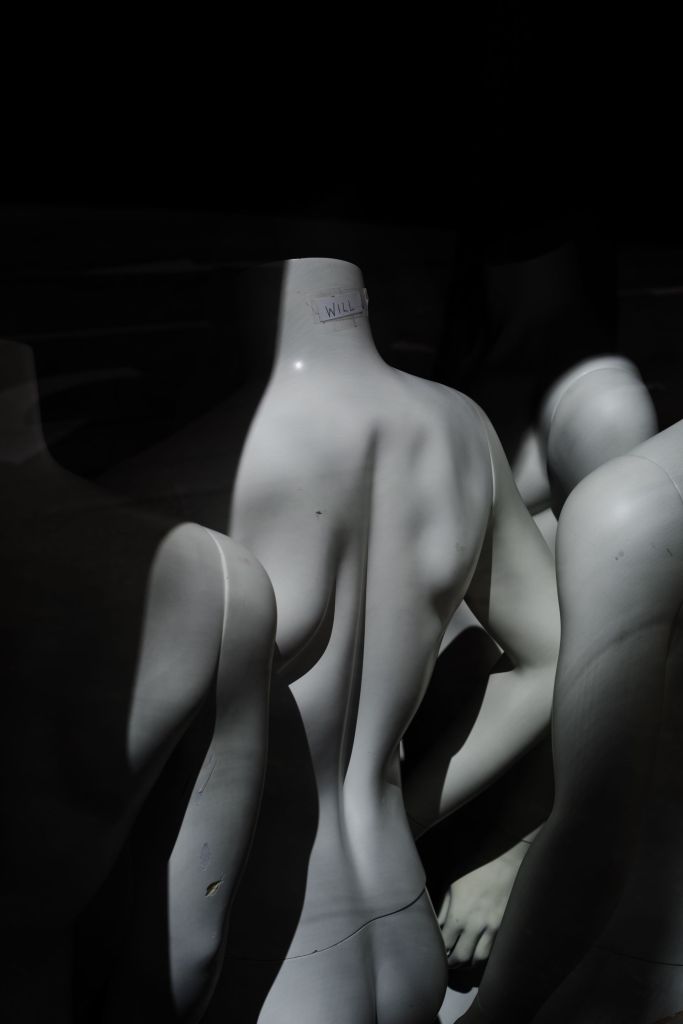
Next item: snap focus. Zone focusing is something I do all the time, but it’s harder on the GRIIIx than the GRIII. Simple physics, of course. There’s less depth-of-field with a lens with a longer focal length. It’s not too difficult to get sufficient DoF with the GRIIIx lens, but I frequently find that, if I stop down enough to get the focus zone I need, this pushes the camera into rather high ISO ranges, which degrades image quality. I find I need to push up the ISO more than with other cameras, because I also need a somewhat higher shutter speed. I feel like anything below 1/500 for street photography is often a recipe for unintentional motion blur. Is that just bad technique on my part? I don’t think so; I think it comes back to the small, light camera body and the way it’s meant to shoot extended out from your body at LCD-viewing distance. These things contribute to less stability for the camera, and it comes through in blurry shots if you’re not careful.
Image quality: we know the GR series is typically quite good (oops, I almost started praising the camera. That’s for my other articles). But Ricoh chose to implement an “accelerator,” a sensor pre-processor, on the GRIII range to reduce noise in the RAW files. I first encountered this technology in the Pentax KP. Then the GRIII, then Pentax K-1 Mark II, then GRIIIx. It’s not all bad, don’t get me wrong. It doesn’t smear details or otherwise act like typical JPEG noise reduction. It allows for grain at higher ISO values, but makes it a little gentler and not unpleasant to look at much of the time. However, here’s my complaint: since it’s baked in, I can’t take GRIIIx DNG files into the modern AI-based noise reduction programs (such as DXO PureRAW 4, which I own) and get results which are as good as they are when running even smaller/older camera sensor formats through it. The programs tend to do better, for example, with Micro 4/3 RAWs than with the RAWs that come out of Ricoh/Pentax’s pre-processed files, which can appear to have less detail when run through PureRAW. The effect isn’t as noticeable with the K-1 Mark II’s 36MP full-frame sensor. Caveat: only really high ISO images need this treatment, but since the accelerator effect is more noticeable the higher you go, it sort of compounds the problem.
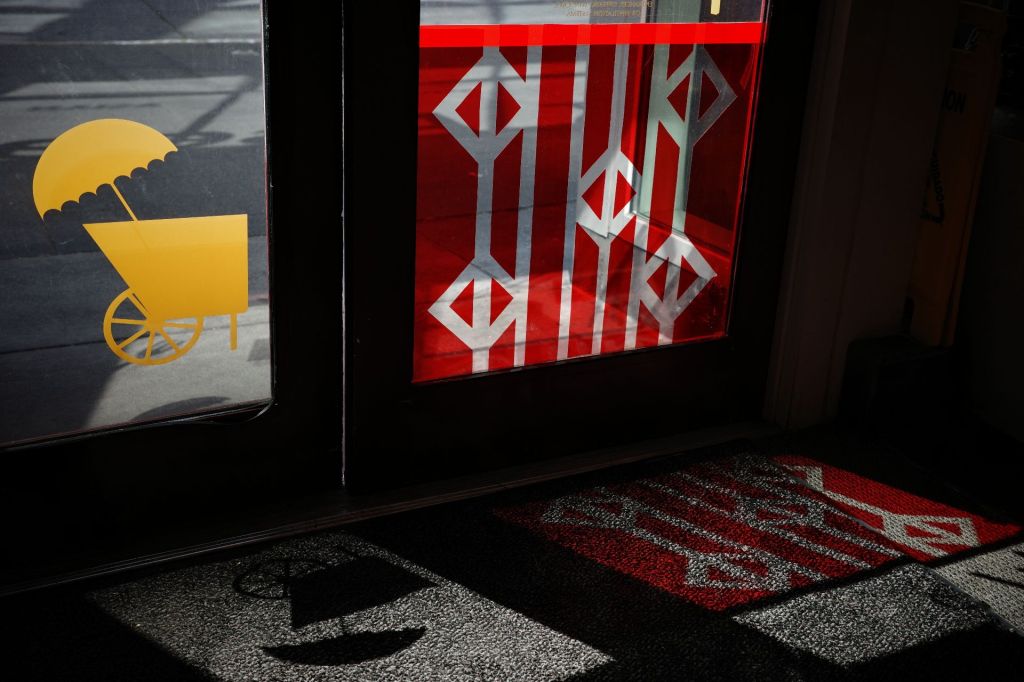
Let’s move on to the controls. I already mentioned how the camera is set up for one-handed use. There are methods for setting all three parts of the exposure triangle: ISO, shutter speed and aperture. However, they’re not all created equal. The front dial is the most conventional. The rear has the other two controls: one is a horizontal toggle with the ability to press it in to bring up a quick menu. The other is a radial wheel around the 4-way controller. I’m only going to dial in (hah hah…) on this wheel. It’s not good. It feels light and flimsy, and it shares ISO with exposure compensation in manual mode. You have to press in on the left section of the wheel, as indicated by the 4-way controller ISO icon (the wheel provides the “button” part of the mechanism for these 4 options). Pressing in sometimes makes the wheel rotate, changing the other parameter (usually exposure comp) when pressing in for ISO. It’s just a fiddly control. It doesn’t inspire confidence. My first GRIII also had a bad case of unresponsive wheel-itis, something many others ran into. I don’t know if Ricoh fixed the problem, but my later-manufactured GRIIIx never had the unresponsiveness issue, so there’s that.
For my penultimate complaint, I’ll mention the well-documented Achilles heel of the GR series (since at least the GR (I) APS-C model), and that’s dust on the sensor. Yeah, it has been done to death, but that’s because it’s real, and really bad. It’s my least favorite thing about these cameras. I’ve owned three of the GRIII series. Two GRIII’s and one GRIIIx. All three eventually got dust on the sensor or the rear of the lens assembly, within about two years of use. This is with careful storage and transport/carry. I couldn’t keep the camera in a sterile, dust-free environment all the time, so inevitably it ate up some dust. The cameras are designed with both a sensor-shake dust removal system (with an adhesive to collect dust near the bottom of the sensor) and a sort of foam around the gaps in the lens barrel. Both of these do a little bit, but neither works 100% of the time. It’s really unfortunate, and it’s a ‘feature’ of fixed lens cameras, especially when the lens expands/retracts. It’s real, it can’t be ignored. My solutions have included extended warranties, and, eventually, manually opening up the camera and cleaning it off, which was mildly successful but not for the faint of heart.

Now for the last one: the camera’s popularity. Somehow, this camera went from being a secret weapon in the street/snapshooter’s arsenal to being a massively trendy camera. If we didn’t live in an era of supply issues and constantly rising costs, I’d have no problem with this – it cements Ricoh’s viability in the camera sphere, after all. But it’s a massive headache in 2023, ’24, ’25. Also, there’s a particular crowd which are fawning over this camera. It’s the same crowd which has been fawning over Fujifilm cameras for a bit longer. They used to be the people who shot Fuji’s film simulations and loved them, to the point where they were talking as if they were using actual films. But, over time, this group morphed towards people who were releasing “recipes” to make the film sims look even more like specific films, or films under specific conditions. Now, recipes are their own thing, and people are going nuts for them. Ricoh got in on the recipe ‘revolution’ when an app was released called, appropriately enough, “Ricoh Recipes.” Now, nearly everything I see at this point in 2025 shows people shooting the GR series with heavily altered JPEG profiles which look nothing at all like real life. It’s the Hipstamatic/old-time Instagram effect, but gone in-camera. My two biggest issues with this trend: a) these filter thingies were originally designed to mask bad image quality from smartphone sensors – not mask the good image quality of a good camera. Why are we buying the best compact cameras with the best optics to make them look worse? And, b) the lack of creativity I’m seeing from people who are just chasing recipes is absurd. It’s quite possible that many of these people wouldn’t have become so enthused with photography if the pretty colors hadn’t drawn them in. It’s equally possible that many of them will mature, and start to focus on good photography over recipe madness. But, in the here and now, the signal-to-noise ratio has grown increasingly noisy in the Ricoh GR, sphere, a sphere which used to be much smaller, but much more focused on quality picture-making.

There you have it, my first Dark Mode review! Did it hurt to say so many negative things about the Ricoh GRIIIx? In fact it did… but I think there’s value in collecting the negatives about products, not just singing their praises. If anything, we need to do more of this to counter the consumerism in our lives. Not, mind you, just saying negative stuff on the internet. Rather, we need to implement a more balanced, judicial view of cameras and gear for ourselves, so we’re not always chasing after the new and shiny. Does that mean I’m not interested in purchasing the GRIV when it becomes available? Um, no – I will likely even preorder that camera. But it’s because I’ve been without a GR for too long, not because I’m convinced that the old camera wasn’t good enough for me (honesty time, I’ve done the latter, more than once). It simply fits such a specific niche in what I like to do.
 The Sprocket Docket