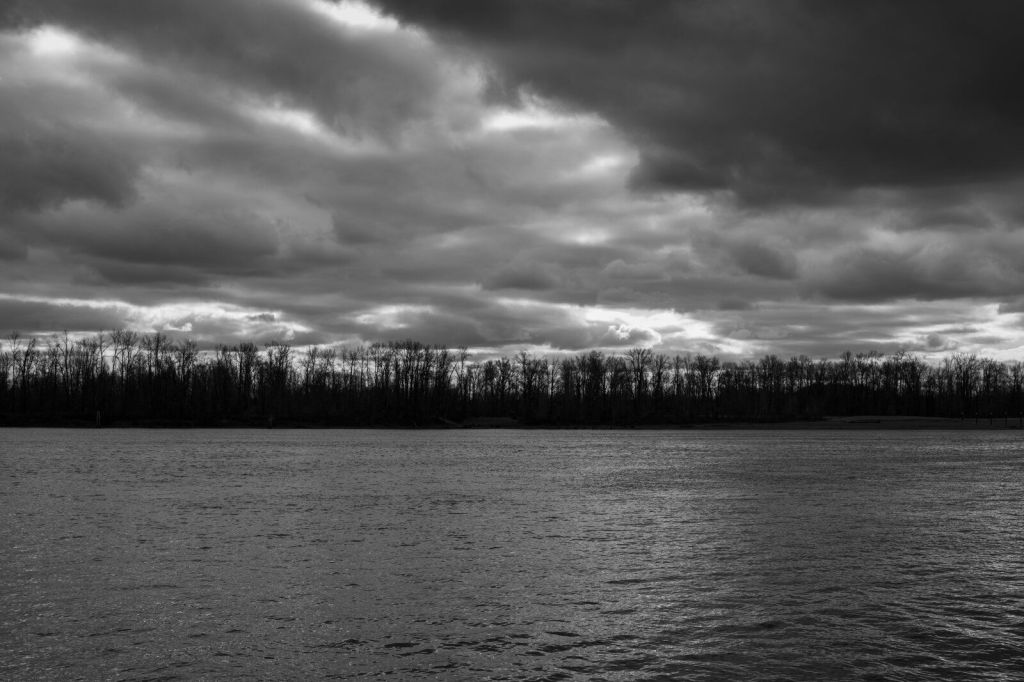
We’ve had the term “elevator pitch” for a long time now. The idea is having a short, distilled message, usually a sales pitch, that can be given in a short time, hypothetically in the time it takes to share an elevator ride, though I’m not sure how often that has actually been tried. The elevator in my building is quite fast, or else I’m a slow salesperson. I have half a mind to try and coin a new term: “voicemail review.” This is because I conceived of doing a review of the Pentax K-3 Mark III Monochrome first as a listener voicemail to my favorite photography podcast, On Taking Pictures. The voicemail-box allows for something like 3 minutes, and I succeeded in wrapping up before the recording ended. Only problem… On Taking Pictures ceased to record before they got to my voicemail. It’s the second time they’ve ended the show – once in 2018 or thereabouts, but it was brought back in the past year or so, to my delight. It’s gone again. We try to live and carry on. Oh, and I don’t have the K-3 III Monochrome anymore either. Life hurts sometimes.

Anyway, the point of this review (preamble aside) is to be short, and also to be oriented around the spoken word instead of spec sheets or more in-depth details than can easily be recalled from memory. Basically, the impressions you could recall when leaving a voicemail for your favorite photographic podcasters, who have yet to break your heart a second time. With that said, let’s proceed.
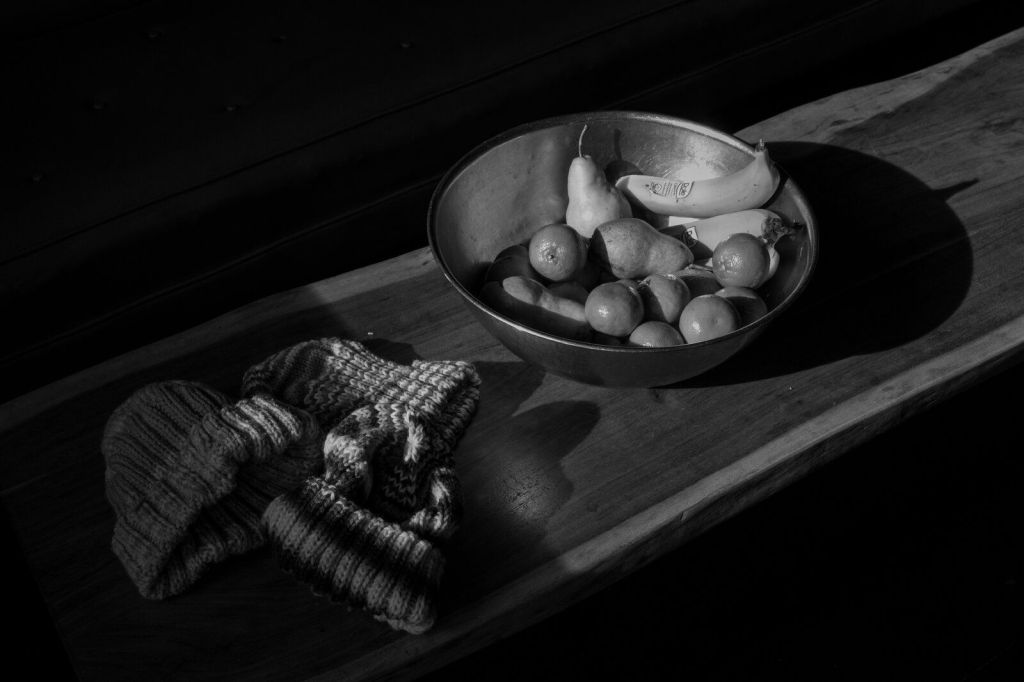
My first impression comes on picking up the camera. It’s incredibly solid, rigid, metallic and dense. It’s not especially heavy (lighter than my K-1 II) but it makes its mark in terms of quality. The lines and angles are all very deliberate, somewhat artistic, and they’re all as if carven from metal. The pentaprism hump, a prominent part of an SLR camera, is all metal, and the edges just feel great. A bit sharp, not too sharp, with a slightly rough paint finish. I don’t want to be hyperbolic, but this camera (more than any of the previous Pentax models) feels like Pentax is taking a Leica-esque approach: taking their camera tradition and raising it to the Wetzlar level of quality. No wonder the regular model launched at $2000.
And yes, ironically perhaps, part of the reason the camera feels solid and rigid is because the screen doesn’t move. Do I care? I don’t care. It might be a little nice once in a while to utilize live view (which is very snappy and works well, better than my K-1) from a strange angle, but the point of an SLR is the viewfinder.
And the viewfinder deserves more description than I can give it (I can tell I’m going to run long). It’s 99% as good as the K-1 viewfinder, even though the mirror is physically quite a bit smaller due to being APS-C instead of full frame. It’s really bright, large, crystal clear. It’s undoubtedly the best optical viewfinder on an APS-C camera, period, and it makes it so much easier to shoot with, even manually focus with.
Moving on, it has a K-mount (obviously) and that also delivers all the excellent backwards compatibility with older lenses, something Pentax does extremely well. The Pentax-A series manual focus lenses allow the full metering options with any exposure mode, as do all the newer lenses. Going backwards, you can stop-down meter using the special button (usually it’s green, but nothing on this camera body has color, so it’s gray) with older lenses. There’s even a first-party adapter for screw-mount M42 lenses, which I’m itching to get my hands on.
There’s a menu redesign which honestly makes better sense to me than the older Pentax menus. It’s more like the Ricoh GRIII series. It’s a bit stripped-down from what I imagine the regular K-3 III has, since any of the options (such as white balance) which would be available with the color camera simply aren’t there. There are three JPEG profiles, essentially soft, medium and hard contrast, with some variables. I’m a little disappointed that Pentax hasn’t fleshed these JPEG options out a little more post-release, as Ricoh did with the GR series. As for the rest of the camera internals, there’s a great-sounding shutter. Really great. It makes my K-1 shutter sound wheezy by comparison. In-body image stabilization is just as good as it’s ever been, maybe better.
Okay, last but not least: the monochrome sensor! I know fancy Leica Monochrom users have talked about how much sensitivity and detail they get for a long time now, but the experience still took me by surprise. The sensor captures so much nuance, such sharp detail, and at such high ISO levels, that I can’t stop thinking about it. I’ve been shooting the full frame K-1 II for a couple of years now and the Monochrome feels like a full frame sensor. It has finer gradations between tones than you will see short of a bigger sensor. I have been shooting it with the HD FA 31mm f1.8 Limited lens, and been blown away by the results. You really have to shoot with it to understand what I mean in the way it takes a real-life scene and renders it in such a subtle way.
I lied; the above was the second-last thing (penultimate thing, if you will). There’s something special about seeing the world through an SLR viewfinder, and recording it in black and white. It’s something you just don’t get from EVFs or LCD screens. You can see the way the optics change your scene directly in the viewfinder (though if you are stopping down, you should actually use the DoF preview function sometimes). What you can’t see is the black and white conversion. But you can imagine it, and that’s a big part of why it’s so rewarding to shoot black and white. Seeing the particular details which look great in black and white, whether texture, fine gradations of light, graphic elements of contrast, or whatever else, and then seeing how that ends up in the photo with your chosen exposure settings. Some folks say that using a black and white EVF or screen helps them visualize in monochrome. Well, they’re missing out. There’s more to it.
Yikes, I have even one more thing (meaning the penultimate thing was actually the antepenultimate thing)! The editing experience. I have certainly done my share of black and white conversions in my time, whether simple, like in-camera with the Ricoh GR series, or complex, using a RAW processor and then editing in Nik Silver Efex. It takes a fair amount of work to create a black and white final image which actually looks good, and has the things I like about monochrome film, such as those smooth transitions, gentle highlight rolloff, and robust midrange tones. I don’t love this part of the process. Sitting in front of my desktop computer is not photography. With the Pentax Monochrome, I shoot DNG RAW files and bring them into Lightroom, from which all I need to do is move the lights/darks, black/white sliders, and maybe add a bit of contrast, and that’s it. I can create a great looking image and export to JPEG in under a minute. It’s hard to express how great this is, and it’s a huge part of what makes me want to keep the camera.

That’s it. I think I beat the timer! Sadly, the cost of the K-3 Mark III Monochrome is just a little much for me right now, since I have both the K-1 Mark II and the Ricoh GRIIIx to shoot with. But it’s absolutely at the top of my list. Now, when I go to convert a RAW file from one of the color cameras to black and white, I can’t help saying to myself, what’s the point? I think I’m spoiled. I’m guess I’m a monochrome sensor guy now.

 The Sprocket Docket
I’m a Pentax enthusiast from way back having started out my interest in photography with the Spotmatic. Now I have two K-1 bodies and a host of other digital Pentaxes. I’m just having a hard time believing that this monochrome-only camera can create images that are superior enough to what I can create with my existing bodies to warrant the cost. I’d love to see some image comparisons taken with, say, a K-1 or K-3 compared to this K-3 mono.
LikeLike
Hey Dave, thanks for the comment! You know, it’s hard to directly compare the two sensors/formats. I’m certainly not the kind of technical guy to create serious image comparisons. However, I did touch on the image quality comparison with the K-1 in my most recent post. They’re not the same. They don’t render the same, and the K-1 has a certain “depth” to it that is not replicated on APS-C sensors. It’s most apparent at base ISO on the K-1 in color, where the combination of tonal range, color rendition, and focus falloff are something special. But, and this is where I come up with my comparison, the K-3 Mono provides a rendering of tones and precise detail way down into low-light shadows, probably a couple of stops beyond where I’d be willing to go with the K-1. I can’t describe it better than to say that it’s hyper-sensitive to the nuances of light. This characteristic disappears if you overexpose – it’s really easy to flood the photosites and lose all information – but there’s a very gentle descent into shadows and high-ISO grain that’s just better than what a color-filtered sensor can manage. I think it comes down to the interpolation, since in a given part of a scene, a Bayer pattern provides different light values to the different pixels based on the colors of surfaces and ambient light. It just can’t produce as subtle of a range of values as a pure monochrome sensor can. Hope that makes sense! Keep shooting those K-1’s!
LikeLike
got the monochrome about a month ago and loving the output. Currently my Sigma Art 35mm f1.4 is living on it, and seems an awesome combination. I hope monochrome, a prime and the big M will make me a better photographer
LikeLike
I suspect that your Sigma is a great option for the Monochrome. I shot with the FA 50mm f1.4 on it for a bit, but that has been the only f1.4 lens I’ve yet tried with it. I appreciated how the slightly “dreamy” wide open characteristics of the FA 50 1.4 rendered on the monochrome sensor. The limitations of a single camera and lens can be a real encouragement to development, but I think subtracting color is an even greater limitation, which has potential for creating some awesome work. Good luck!
LikeLike